
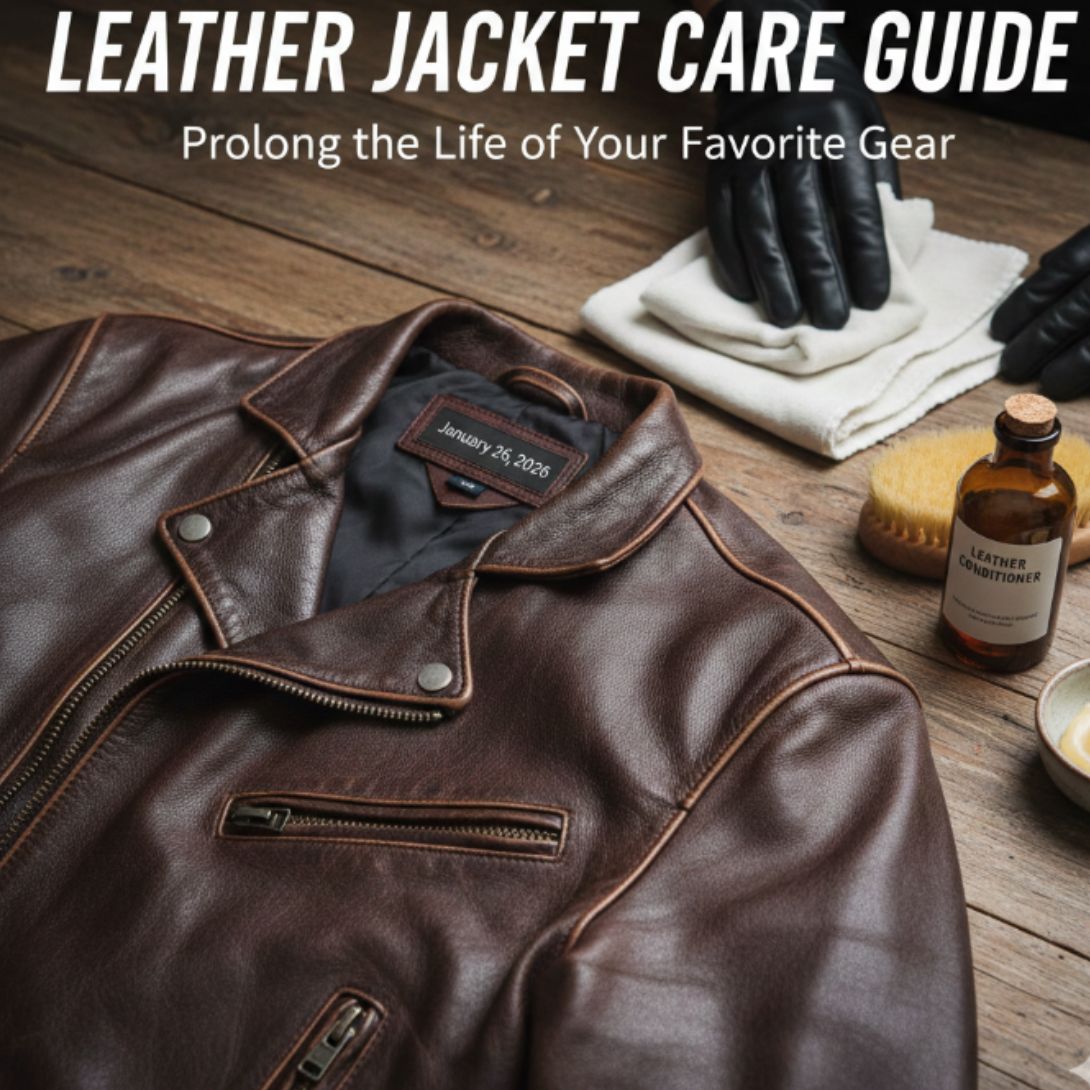
You’ve invested in a premium custom leather jacket. Over time, it’s become your go-to piece for nearly any occasion. You might wear it on a cold night supporting your lads beneath those Friday night lights. Or maybe you reach for it on a fresh morning while strolling through the backcountry fields.
However, you might eventually realize that you need to learn how to clean a leather jacket or leather coat without damaging it (perhaps after a few too many near-misses with your dog and that cup of coffee). Your instincts are correct if they warn you not to simply throw it in the washing machine.
Although leather is durable, you run the risk of damaging something precious if you don’t know how to care for leather jackets. Follow the instructions below to maintain and preserve your leather jacket so you may enjoy it for many years to come. Leather demands a special kind of maintenance.
One Note to Start: Before you start, refer to the jacket’s manufacturer’s instructions. The manufacturer will typically suggest a cleaning method that works best for your product. Additionally, constantly spot-check your technique at a discreet location.
Understanding Different Types of Leather
Not every leather jacket is made equally. Damage may result from treating them as they are. How to take care of your leather jacket depends on the type of material. Before using any products or cleaners, it is crucial to determine what you are dealing with.
When looking for a leather jacket, the following are the primary varieties of leather:
- Full-grain leather: The most resilient and organic-looking leather has an untouched surface that gradually acquires a deep patina, or gloss. Periodic conditioning helps keep it from drying out and cracking.
- Top-grain leather: The surface of this moderately refined leather has been sanded to eliminate flaws without sacrificing strength. Although it needs to be conditioned, top-grain leather is more stain-resistant than full-grain.
- Suede and Nubuck: The softer, velvety textures of these leathers make them more susceptible to stains and moisture. Water or traditional cleansers should never be used on certain kinds of leather. Instead, spend money on specialty erasers and a high-quality suede brush to get rid of grime. Additionally, you can provide an obstacle against stains by using a protective spray.
Knowing the type of leather in your jacket is the first step towards selecting a suitable care technique. When in doubt, seek professional advice or carefully read the care instructions on your jacket because what’s effective for one may harm another.
How to Clean a Leather Jacket: The Basics
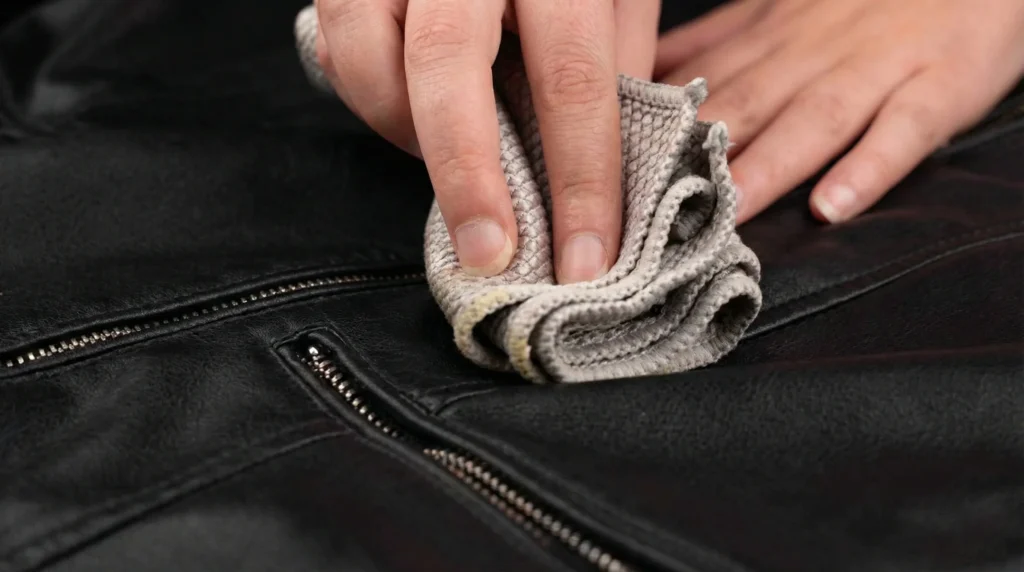
Dust the leather
Wipe away any oil or dust accumulation using a gentle cloth or brush. To help avoid damaging the leather in any manner, always move in a circular motion.
Prepare a mild soap solution
For washing your jacket without inflicting damage or abrasions, use two tablespoons of liquid detergent with warm water to make a gentle, delicate solution. Less is more when it comes to handling and cleaning leather.
Note: You can skip over step 4 if you are unwilling to apply the soap solution, particularly if the jacket isn’t very dirty.
Gently clean the leather
For a few minutes, soak a delicate cloth or sponge in your gentle soap solution. Make sure the towel or sponge is moderately damp but not dripping wet before putting to the leather. Avoid rubbing! Ensure that you feather your blots and blot lightly to prevent watermarks. Using as little wetness as possible is crucial to this cleaning method. Examine the leather for areas where oil or grime has gathered, water stains, and discolored patches.
Wipe down the jacket
This time, wipe off the jacket with clean water and a fresh, soft towel to get rid of any soap residue. (Don’t forget to use the least amount of moisture required.) Make sure there isn’t any water that remains on the jacket because excessive moisture can be harmful. After using a soft, dry cloth to pat the leather, hang the jacket anywhere cool until it dries fully. Avoid trying to expedite the drying process by using direct heat, such as a hair dryer or direct sunshine.
Clean the Inside
You can clean the inside of your leather jacket with the same soap solution that was used to clean the outside. Cleaning the inside of your jacket is just as vital as maintaining its external appearance, even though it might not be visible. Sweat on the inside of the jacket can ultimately deteriorate the lining and weaken the leather, in addition to causing smells to finally accumulate.
- Use a hanger for hanging the jacket inside out.
- Use the exact same gentle detergent solution you used on the outside of the jacket to clean the inside with a gentle sponge or towel.
- Pay special care to the underarms, collars, and cuffs.
- In a dry, cool place, let the jacket to dry. (Avoid using direct heat.)
Spot Stain Removal
It’s best to take immediate action—that is, as soon as you see the stain—for all stains. The stain won’t set if you act fast. Next, make sure to blot rather than rub. When a fresh spill occurs, dab the offending liquid right away with a clean, dry cloth.
“Rubbing will just force the stain deeply into the leather.”
Use the previously mentioned moist cloth approach for general dirt or unknown substances. For minor spots, an easy wipe with water that has been distilled is often sufficient.
You may likely need to use more intense techniques, such as a cleaner designed especially for your kind of leather, if the stain is too tenacious or set in. Apply a tiny bit of the cleaner on a soft cloth when you’ve found the correct product. “Don’t forget to test it on a discrete part of the leather first.”
Next, use a gentle circular motion to work on the stain. Expert advice: If at all possible, do this during the day in a well-lit environment. This will keep you from going overboard and give you a better idea of how your attempts are performing. Go slowly; it’s easy. Once you’re happy, use a fresh, moist cloth to remove any leftover cleanser and allow it to air dry fully.
What to avoid when treating stains on leather
Remember that leather requires special care, even though it may seem sturdy. It’s essential not to use substances such as chlorine bleach, benzene, alcohol, or acetone. “Never.”
As mentioned earlier, using excessive amounts of water can cause stiffness or fresh stains. Never submerge a leather jacket entirely in water.
Accordingly, you should never wash your jacket in a washing machine. It will eliminate the organic oils from the leather, which are important for its softness, suppleness, and durability.
How to Store Your Leather Jacket Properly
Storage must be done correctly. Mold, wrinkles, and other irreversible damage can result from improper storage. To prevent it from sagging, use a strong hanger with wide shoulders or padding. Its shape can be distorted by wire hangers.
Choose a fabric with a ventilation garment bag that can be kept in a cool, dry location if you must use a cover. Give it lots of room to breathe. Airflow stops your jacket from gathering odors from other clothing and helps avoid wrinkles.
Caring for Your Leather Jacket: A Worthwhile Investment
Your leather jacket may last a long time if you take good care of it. Regular maintenance and cleaning are necessary for even the finest leather motorcycle jackets. Your jacket’s leather may be kept smooth and supple for years to come and cozy for your next ride by avoiding strong cleaners, keeping it dry, and shielding it from heat and sunshine when not in use.
FAQs Related To The Care Of Leather Jackets
Does My Leather Jacket Need to Be Waterproof and UV Protected?
Yes, shielding your leather jacket from water and UV rays is a smart idea. Using UV protection can help preserve the color and suppleness of leather because prolonged exposure to sunlight can cause it to fade and dry out.
Although leather may withstand some water, it is not waterproof. The natural oils in your leather jacket can be shielded from water damage by using a waterproofing spray designed specifically for leather, particularly if it unexpectedly rains.
How Frequently Should My New Brown Leather Jacket Be Protected and Maintained?
The conditions your jacket is exposed to and how frequently you use it determine how often it needs to be maintained. As a general rule of thumb:
Cleaning: If you wear your jacket frequently, give it a quick monthly cleaning with a moist cloth and a thorough cleaning two to three times a year.
Every six months, or more often if the leather jacket is frequently exposed to inclement weather or direct sunshine, use a waterproofing spray and UV protection.
Are Leather Jackets Difficult to Maintain?
Although leather jackets need special attention, maintaining them isn’t always difficult. A leather jacket can last for many years if it is cleaned, conditioned, and stored properly. Appropriate and continuous care is crucial.